




Legacy access
Remote dependency, branch-office complexity, mapped drives and routine VPN access can slow teams down when they need files away from the office.
Dubai · UAE · GCC
Replace legacy Windows and NAS storage with a cloud workspace planned around your files, access model and everyday business workflows.
RAIDEFEND helps organisations assess what they have today, map how teams need to work, and carry out a controlled move to a more flexible file environment.

A practical migration story
A concise look at the decisions that help teams move from legacy file storage to a more usable, controlled workspace.
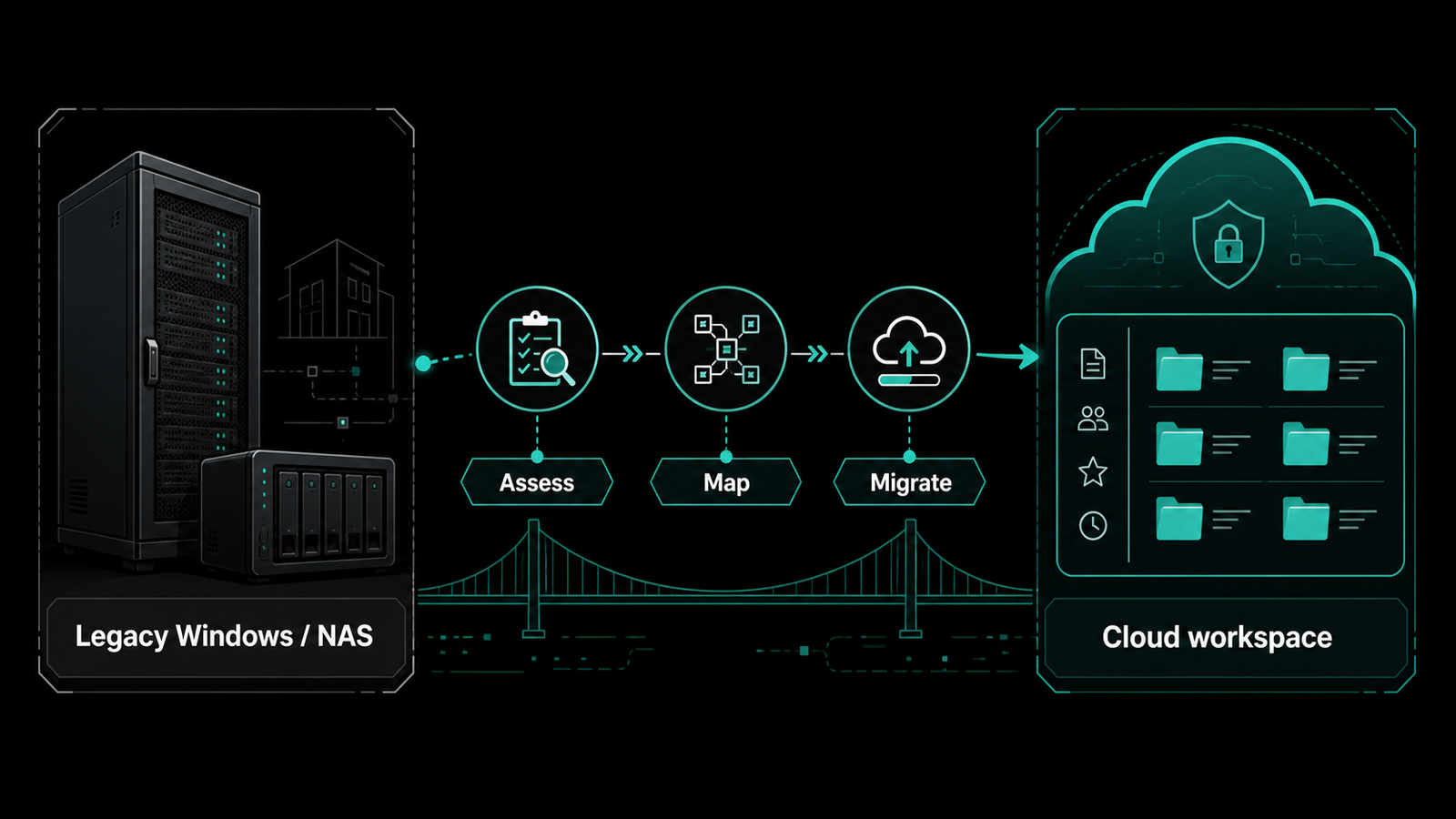
When business files are tied to ageing Windows servers or local NAS devices, everyday access becomes harder than it should be. For organisations across the UAE, RAIDEFEND helps assess content and map permissions for a controlled move to Egnyte. Start with the files that matter most, clarify access structures, and validate the new experience with a focused pilot. Then roll out in practical waves, supporting controlled sharing, version history, file locking and large-file workflows. Build a file workspace your teams can truly rely on.
Why organisations replace file servers
A file server often becomes the centre of daily operations without a deliberate ownership model. Over time, remote access becomes cumbersome, permissions become unclear and external sharing becomes risky. Replacement is an opportunity to improve how people find, access and collaborate on business content.
Remote dependency, branch-office complexity, mapped drives and routine VPN access can slow teams down when they need files away from the office.
Inherited access and unmanaged folders make it difficult to confirm ownership, remove outdated access or provide the right access to a new project team.
Large files and external collaboration can move into personal tools or ad-hoc transfers when a controlled sharing method is not part of the working process.
Migration path
Each stage creates confidence for the next. The approach can account for active and archived data, folders, permissions, remote users, business applications and the different workflows that exist across departments.
What the programme addresses
A file server replacement should leave the organisation with a cleaner operating model. The result is not only a new location for data, but clearer content ownership, better access control and a practical method for collaboration.
Separate active business content from duplicate folders, outdated shares and material that needs an archive or retention decision.
Align groups, departments, roles and projects to a future-state permission model that is easier to understand and maintain.
Design repeatable sharing approaches for employees, customers, contractors and project partners instead of relying on ad-hoc transfers.
Build pilot feedback, onboarding, implementation support and cutover communication into the delivery plan from the start.
Built for day-to-day work
The strongest workspace is one teams can use confidently. Clear access rules and practical collaboration workflows help the migration become a better business experience, rather than another technology change that creates new workarounds.
Access by design
Review access with the teams who own the work so the future workspace is usable from day one. Access can be designed around departments, projects and temporary collaboration rather than years of inherited server permissions.

Adoption in practice
Plan desktop use, project folders and the work patterns that must continue after migration. Adoption support helps teams transition without creating shadow copies, unmanaged shares or new collaboration gaps.
GCC coverage
RAIDEFEND supports file server replacement discussions across the UAE and wider GCC. Delivery planning is confirmed for each engagement based on the organisation's users, locations, stakeholders and operational priorities.
Start with the current state
Discuss your current estate, migration priorities and the cloud workspace you want to create next.